













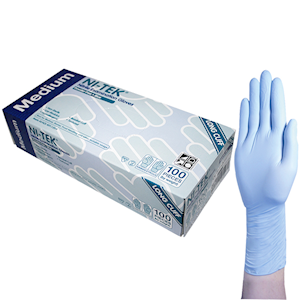






Not every product needs to serve its original purpose to offer value.
Across healthcare, education and professional workplaces, some supplies reach the end of their stated shelf life without being used. While these products may no longer be suitable for their original applications, selected items could serve another purpose in non-clinical settings.
From educational demonstrations to product familiarisation, exploring appropriate alternatives may help organisations reduce purchasing costs, minimise unnecessary waste and make more considered use of existing resources.
Why Should Businesses Rethink Product Waste?
Every product requires resources to manufacture, package, transport and store. When unused supplies are discarded, the materials and energy involved may be wasted.
For organisations managing large inventories, changing requirements and limited product shelf lives can contribute to unnecessary disposal.
Australia's National Waste Policy encourages waste avoidance, resource recovery and more efficient material management.
These principles support a circular economy, where existing resources are used more effectively.
However, reducing waste does not mean every product should be repurposed. Safety, suitability and applicable requirements must always take priority.
How Can Giving Products a Second Purpose Help Reduce Costs?
Training programmes and educational activities often require physical examples to explain packaging, product identification or workplace procedures.
Not every demonstration requires products to perform their original clinical or technical function.
For example, educators teaching inventory management may use suitable packaging to demonstrate stock identification and organisation. Workplace trainers may also use appropriate materials to familiarise employees with different product formats.
Where suitability has been established, discounted out-of-date products may offer a cost-effective alternative to purchasing new supplies for these activities.
Potential savings depend on product prices, condition, handling requirements and eventual disposal costs.
The goal is to purchase according to an activity's actual requirements while maintaining appropriate safety standards.
What Are the Environmental Benefits of Reducing Unnecessary Waste?
Unused products still represent consumed resources, including raw materials, manufacturing energy and packaging.
Identifying appropriate alternative applications may help reduce avoidable disposal and, in some circumstances, demand for newly manufactured demonstration materials.
The Australian Government's Circular Economy Framework encourages more efficient resource use and better material management.
For organisations reviewing their sustainability practices, considering suitable existing stock before purchasing additional supplies may support waste-reduction efforts.
However, environmental benefits are not automatic. Transportation, storage and disposal requirements should also be considered when assessing whether an alternative use is worthwhile.

Where Can Products Find a Suitable Second Purpose?
Different industries have different training and operational needs. Selected products or packaging may support activities that do not rely on their original safety, sterility or performance.
Healthcare and Aged Care
Unused medical consumable packaging may support training in product identification, expiry-date checks and inventory management without involving patient care.
Dental Practices
Suitable packaging from dental consumables may help staff recognise product categories, interpret labelling and practise stock organisation during workplace orientation.
Beauty and Tattoo Studios
Non-hazardous accessories or packaging may support product displays, visual demonstrations and stock-management exercises without skin contact or actual treatments.
Laboratories and Educational Facilities
Suitable unused containers or packaging may be considered for labelling demonstrations, inventory exercises and non-testing educational displays.
These examples are not blanket approvals. Products involving sharps, medicines, hazardous chemicals or other safety-sensitive materials may be inappropriate even for non-clinical activities.

What Should Customers Consider Before Purchasing?
Customers should review individual product descriptions, expiry information, packaging condition, manufacturer instructions and intended applications.
Expiry dates may relate to sterility, chemical stability, material integrity or performance.
The Therapeutic Goods Administration outlines medical device labelling requirements, including applicable safety-related dates.
Workplace policies, regulatory obligations and handling requirements must also be considered. Where suitability cannot be established, the product should not be used.

Explore Livingstone's Out of Date Collection
Finding value in existing resources begins with understanding where products may be used appropriately.
Livingstone's Out of Date collection features selected discounted products that have passed their stated expiry dates, offering opportunities to explore potential savings and suitable non-clinical applications.
Whether sourcing materials for educational displays, product familiarisation or inventory training, customers can review the available range against their individual requirements.
Discover potential savings while making more considered use of existing resources.
Important Product Disclaimer
Products in the Out of Date collection have passed their stated expiry dates. Customers must check individual product details, expiry information, condition, manufacturer instructions, restrictions and suitability before purchasing or using them.
Expired products must not be used for patient care, clinical procedures, diagnosis, treatment, infection prevention or applications requiring their original safety, sterility, effectiveness or performance.
Alternative uses must be non-clinical, appropriately risk-assessed and legally compliant. Some products may be unsuitable for further use and require appropriate disposal.
References
Department of the Environment and Energy 2018, 2018 National Waste Policy: Less waste, more resources, Australian Government, viewed November 2026, https://www.dcceew.gov.au/environment/protection/waste/publications/national-waste-policy-2018
Department of Climate Change, Energy, the Environment and Water 2024, Australia’s Circular Economy Framework, Australian Government, viewed November 2026, https://www.dcceew.gov.au/environment/protection/circular-economy/framework
Therapeutic Goods Administration n.d., Labelling medical devices to meet regulatory requirements, Australian Government, viewed November 2026, https://www.tga.gov.au/resources/guidance/labelling-medical-devices-meet-regulatory-requirements


